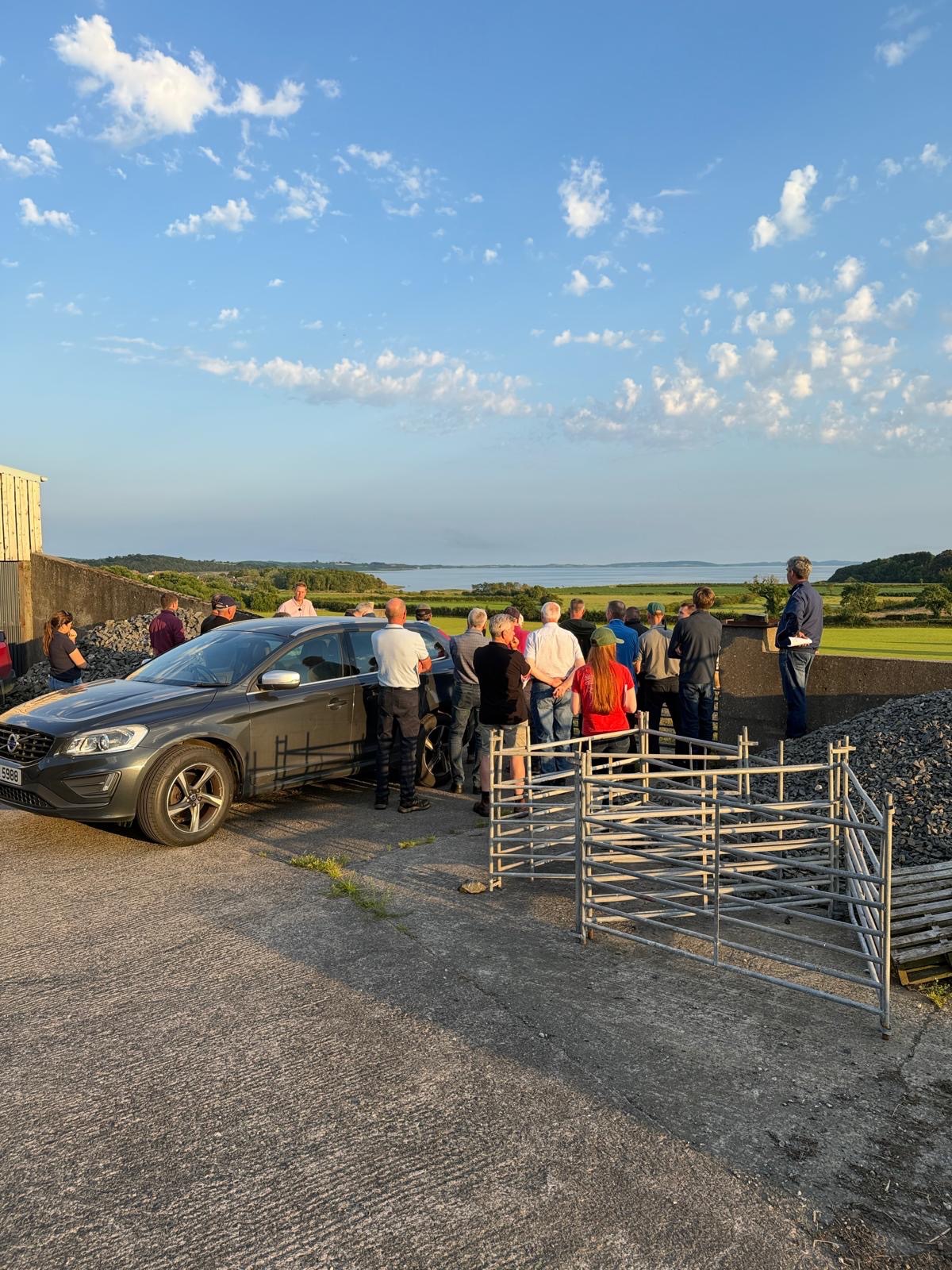
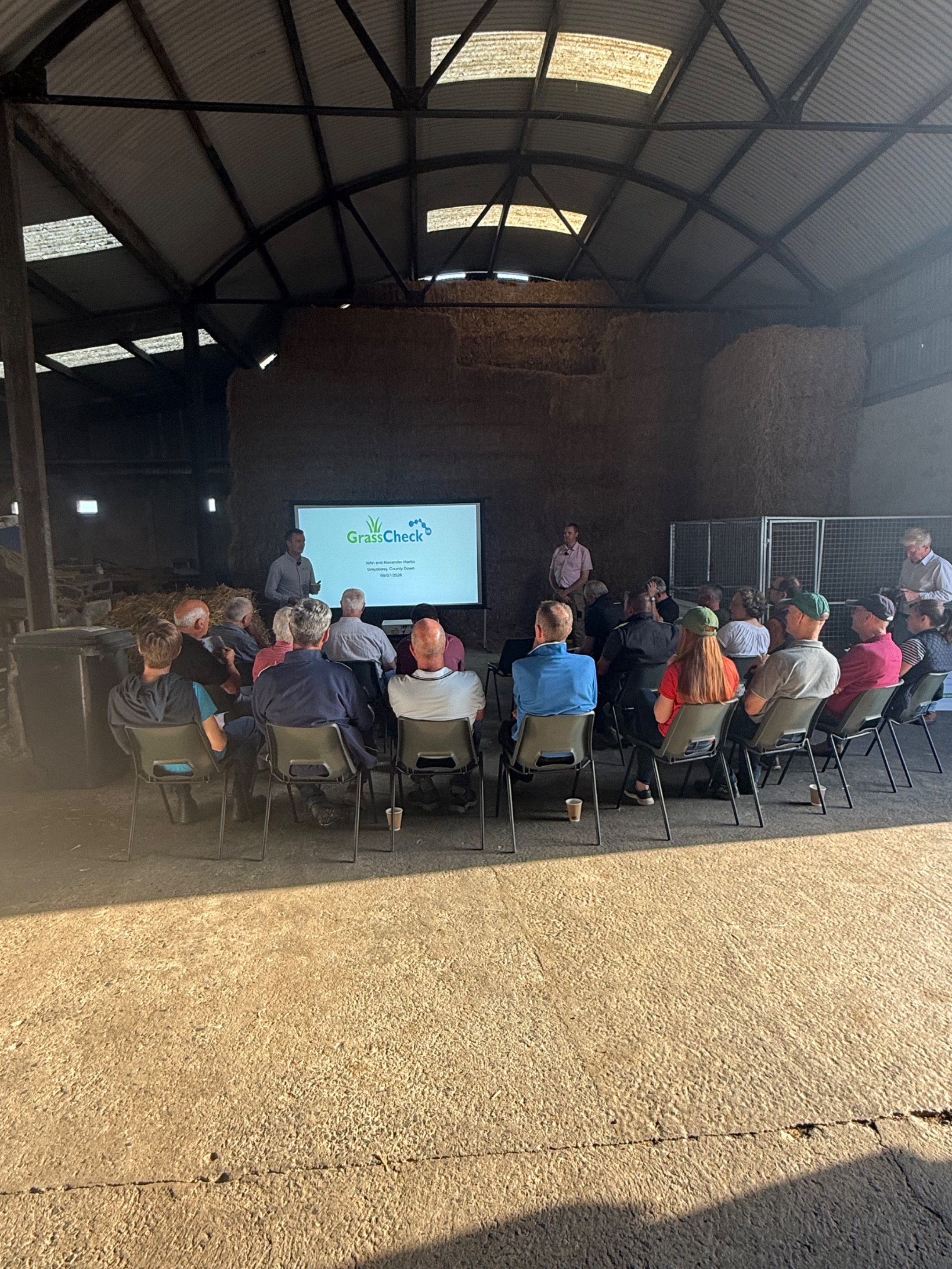
John and Alexander Martin welcomed farmers to Greyabbey for a recent GrassCheck farm walk focused on grass utilisation, lamb performance, breeding and sustainable parasite control.
Grass growth and quality are measured regularly on the Martin farm as part of the GrassCheck project, with the information used to support informed management decisions. John Martin explained that it has been a challenging season for grass management. Strong growth created a surplus for much of the year, while the farm was also slightly understocked because contract-reared dairy heifers were not grazing there this summer.
Rain arrived just in time before declining soil moisture began to restrict growth. With little or no rain forecast at the time of the walk, John suggested that carrying a higher grass cover could prove beneficial, given how quickly growth can fall away because of the farm's soil type and location. In hindsight, that proved to be a well-judged decision. As dry conditions developed and growth declined, the additional cover provided a valuable buffer and helped protect the grazing rotation.
Regular grass measurement and paddock grazing are central to the system. Monitoring the quantity and quality of grass available helps determine when to move stock, remove surplus paddocks for silage or bring ground back into rotation. The aim is to prioritise leafy, high-quality swards for growing lambs, while other stock groups are used to manage residuals and maintain quality for the next grazing.
John also highlighted the value of weighing lambs regularly. "We have had a weigh crate since 2010, and it has been a gamechanger," he said. Routine weighing allows lambs that are not meeting growth targets to be identified early and indicates whether changes are required in grazing, nutrition or parasite control. Performance recording and estimated breeding values also help inform breeding decisions.
Dr David Patterson of AFBI discussed the contribution clover can make when grass growth begins to slow. He explained that perennial ryegrass can enter what he described as a "midlife crisis" after heading, while clover often becomes more productive as summer progresses. Results from AFBI Hillsborough showed that a grass-clover sward receiving 67.5 kg nitrogen per hectare produced 5,486 kg dry matter per hectare by late June. This was slightly more than the 5,414 kg dry matter per hectare produced by a grass-only sward receiving 270 kg nitrogen per hectare.
David noted that clover can be slow to contribute during spring, when farms still require strong early-season production. AFBI is therefore investigating which perennial ryegrass varieties are best suited to clover, alongside combinations involving red and white clover, plantain and chicory. The aim is to identify productive, resilient swards that reduce reliance on purchased nitrogen fertiliser.
Veterinary consultant Cormac White focused on sustainable worm control and the growing threat of anthelmintic resistance. "Every time we drench, we are selecting for resistance," he said. He encouraged farmers to combine faecal egg counts with regular liveweight monitoring so treatment decisions are based on evidence rather than routine.
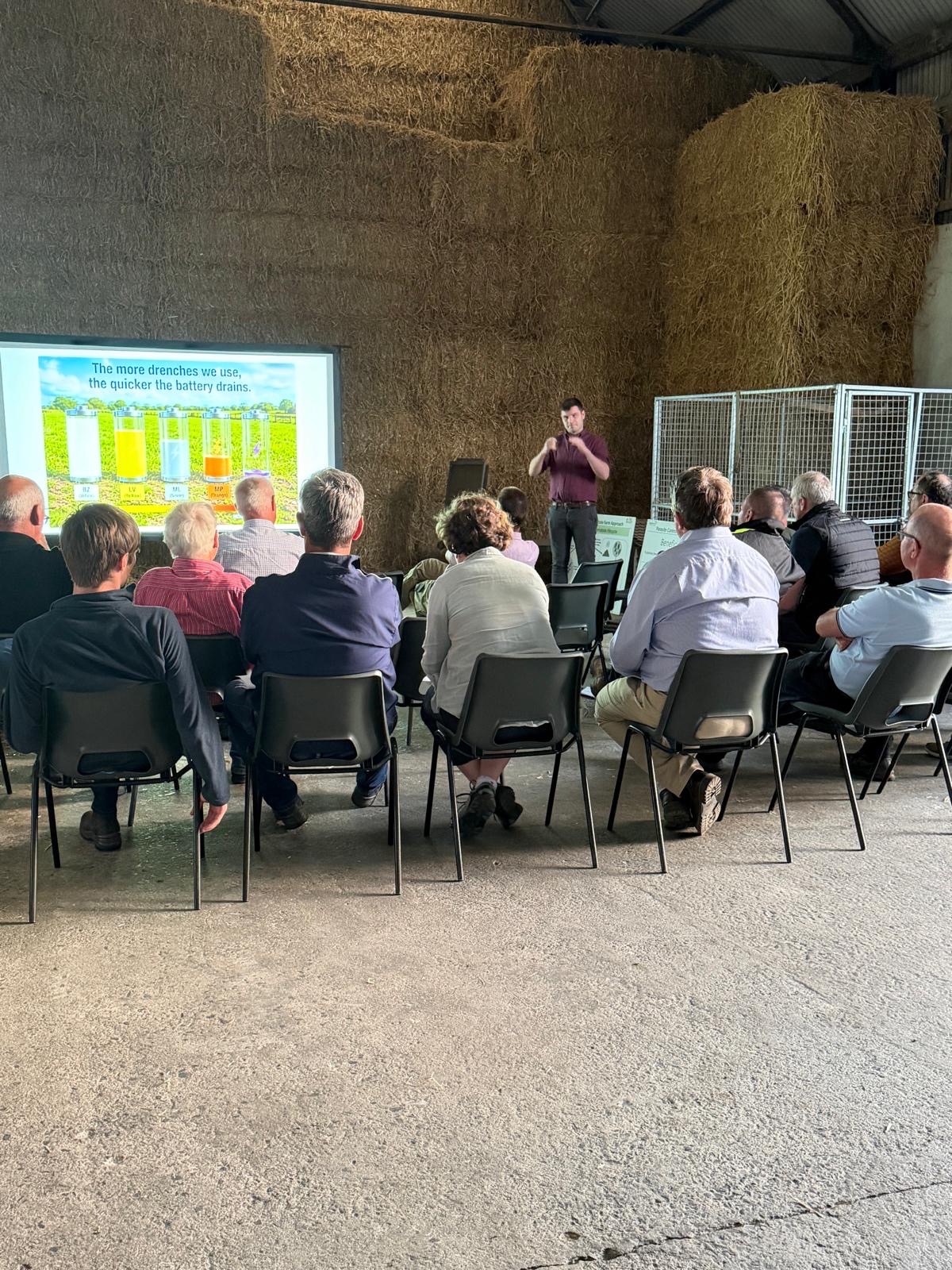
Cormac also stressed the importance of maintaining worms in refugia. Treating lambs and immediately moving them onto clean pasture can allow resistant worms to dominate the next generation. He also urged farmers to remain alert for Haemonchus, which can cause anaemia, poor thrive, weight loss and, in severe cases, death.
AgriSearch Agriculture Manager John Morrow said the event demonstrated the value of bringing farmers, researchers and industry specialists together. "The strength of GrassCheck is that it combines grass measurement, weather information, animal performance and the latest research to help farmers make better-informed decisions," he said. "Seeing these principles applied on a commercial farm gives farmers confidence to adapt them at home. By turning research into practical action, GrassCheck can improve the resilience and profitability of our beef and sheep farms."